

Muharram 1448 Edition
Returning Renewed!
The blessed month of Dhul Hijjah marks the end of the Islamic calendar, whilst the blessed month of Muharram marks the start of the following. As another year passes, we thank Allah Almighty for the good times and the sad times. Indeed, the highs of life and the moments of happiness and joy are nothing but a reason for submission and gratitude to Him; whilst the lows, the shortcomings and tribulations are nothing but a reason for submission and seeking forgiveness and help from Him. Submission is the purpose. It is the essence of worship and servanthood, manifested to its pinnacle by Sd. Ibrahim (peace be upon him), who’s legacy has been celebrated by the Muslim Ummah in the past month and experienced at first hand by the pilgrims of Hajj – a truly auspicious journey and potentially the most influential moment in the lifetime of a Believer. It is a turning point. A moment of transformation. There is a ‘before’ and ‘after’ contrast in the life of a successful pilgrim. The Beloved Messenger ﷺ is reported to have said that “Hajj erases what was prior to it,” and “whosoever completes his rituals whilst his fellow Believers are safe from (any harm caused by) his words and actions is forgiven of his past and future sins.” He ﷺ is also reported to have said that “the accepted Hajj has no recompense but Jannah.” Hence, the accepted Hajj is that which is free of sin and adorned by good deeds. We pray that every pilgrim’s Hajj is accepted, their efforts appreciated and their sins forgiven. Ameen!
As for the apparent signs of acceptance, Ibn Rajab Al-Hanbali رحمه الله notes:
- The concern of the pilgrim being for the hereafter and no longer for the worldly life. His actions and efforts are for the long-term, striving for a successful afterlife over short-term luxury.
- Abstention from sins and disobedience. He realises that his journey of Hajj was a renewal of his promise to God Almighty and His Beloved Messenger ﷺ
One of the signs of the acceptance of obedience is the divine ability to follow it up with further obedience. Similarly, a sign of its rejection is to follow it up with disobedience. So let those who were invited to the holy lands be vigilant of upholding their promise and continuing their efforts of transformation upon their return. We seek protection in Allah from decline after progress!
And let those who remained behind not lose hope. The mercy of Allah is not limited to the pilgrim; rather in the case of one’s Hajj being accepted, those he has prayed for are also forgiven by extension. The mercy of Allah seeks excuses to forgive, so let us be of those who yearn and strive for His forgiveness and pleasure!
A New Moon, A New Resolve
As a new Islamic year dawns upon us, we welcome the blessed month of Allah – the month of Muharram. Upon sighting the new moon, the Beloved Messenger ﷺ would supplicate:
اللهُ أَكْبَرُ، اللهم أَهِلَهُ بِٱلأَمْنِ وَٱلإِيمَانِ ، وَٱلسَّلاَمَةِ وَالإِسْلاَمِ وَالتَّوْفِيقِ لِمَا تُحِبُّهُ وَتَرْضَاهُ ، رَبُّنَا وَرَبُّكَ اللهُ
“Allah is the Greatest! O Allah, bring this new moon upon us with peace and faith, safety and submission to You (Islam), and grant us success in doing what You love and approve of. Our Lord and your Lord is Allah.”
This special month, whilst being from the four sacred months in Islam (along with Rajab, Dhul Qa’dah and Dhul Hijjah), is Shahr-Allah (the month of Allah) – associated to the Almighty Himself. An association of certain creation to the Creator Almighty implies a special rank, as can be seen with the House of Allah (Ka’bah), the Messenger(s) of Allah (May Allah be pleased with them all), the Friend of Allah…etc. Similarly, the blessed act of fasting is directly associated to Allah Himself without any intermediary, “for indeed it is for me, and I shall reward (him) for it,” as reported by the Beloved Messenger ﷺ . He Almighty has kept its reward hidden, reflecting the element of secrecy and sincerity between the servant and his Lord in this particular form of worship. Hence, the month of Muharram and the act of fasting both hold significant status by virtue of their association to Allah Almighty. It is therefore befitting that the Beloved Messenger ﷺ has declared on the authority of Sd. Abu Hurayrah (May Allah be pleased with him) that: “The most virtuous of fasts after the month of Ramadhan are those that are observed in the month of Allah, which you call Muharram.” (Muslim) At this time of reset, renewal and resolutions, it is the perfect time to prove one’s commitment to their covenant with the Creator Almighty by performing the purest and most sincere form of worship.
Some of the pious predecessors are known to have fasted for decades without anyone around them knowing so. One of the predecessors would own a shop. He would leave his house with two pieces of bread every morning and give it to the poor on his way. His family would assume that he ate them at his shop and the people in the market would assume that he has eaten at home. This is how he would conceal his fast from those around him. SubhanAllah – this is what true sincerity and love for Allah looks like. It is then no surprise why fasting and its reward holds such high value in the eyes of Allah! Sd. Ibn Mas’ūd (May Allah be pleased with him) would recommend for a fasting individual to oil and comb his beard and hair, and to present himself as neat to not give any indication of his fasting state to the people around him. As for ending and beginning a new year with obedience, Sd. Anas (May Allah be pleased with him) narrates that the Beloved Messenger ﷺ is reported to have said: “When the two guardian angels ascend to Allah with what they have recorded, and Allah finds good at the beginning and end of the scroll, Allah says: I call you to witness that I have forgiven my servant for everything recorded between the two ends of the scroll.” (Tirmidhi/Tabrani) Hence, it is recommended that the year be ended and begun with fasting and as much obedience as possible in the sacred months of Dhul Hijjah and Muharram, in hope that one’s shortcomings of the entire year are forgiven – and indeed that is not difficult for Him Most Merciful and Almighty!
Āshūrā’: A Legacy of Mercy
This blessed first month of the Islamic calendar also holds a special rank by virtue of the Day of Āshuraa’ (10th Muharram) – a date known to be special for various reasons throughout history. As per various narrations, it is the day that our father Sd. Adam (peace be upon him) was sent down to the world from paradise; the day that he was forgiven for his error; the day that Sd. Mūsa (peace be upon him) and his people were saved from Pharoah and his army; the day that Sd. Ayyub (peace be upon him) was cured after decades of illness; the day that the people of Sd. Yūnus (peace be upon him) were forsaken from Divine punishment. The Beloved Messenger ﷺ is also reported to have said: Indeed, in Muharram is a day, on which Allah forgave Ādam and on which He forgives others.” (Tirmidhi)
Upon his arrival into Madinah Al-Munawwarah, the Beloved Messenger ﷺ saw the Jews and Christians observing the fast of Āshūrā’. Upon enquiry, they revealed that this is a commemoration of the day that they and their Prophet Mūsa (peace be upon him) were rescued from the army of Pharoah. Thus, he ﷺ also began to observe the fast and encouraged the people and children to also follow. It is important to note that fasting on the 10th of Muharram is encouraged along with the fast of the 9th or 11th day. The Beloved Messenger ﷺ is reported to have said on the authority of Sd. Ibn Abbās (may Allah be pleased with him): Fast on the day of Āshūrā’ and oppose the Jews; fast a day before and after it.”
Making the Most of Āshūrā’
In addition to fasting, the night of Āshūrā’ is specially blessed with divine benedictions, Nūr (Divine light) and celestial breezes. Hence, it is highly encouraged to spend it in worship, supplication and connecting to Allah Almighty. It is also encouraged to give in charity and express generosity to one’s family. Sd. Amr ibn al-Ās RA is reported to have said: Whomsoever fasts on the day of Āshūrā’ is as though he has fasted the entire year, and whomsoever gives charity on that day is as though he has been charitable the entire year.” It has also reported that “whomsoever is generous to his family on the day of Āshūrā’, will be shown generosity by Allah throughout the entire year.” (Ahmad)
Some sign up for gym memberships. Some note down financial goals, whilst others set business targets. Most importantly, the blessed days of Hajj and the advent of a new year, especially the day of Āshūrā’ present a golden opportunity to mark the end and begin a new chapter of one’s life with one thing: Tawbah. A return to God. A renewal of one’s covenant with his Lord. A surrender to Him of weakness against Shaytān and the self. A plea to Him of strength and steadfastness. A reset of one’s spiritual focus. Ask yourself – is there progress in my worship; in performing the daily prayers; in connecting to the Noble Qur’ān, daily litanies and adhkār; in studying the Blessed Seerah, learning the religion and ultimately refining my character and leading a life infused with the Blessed Prophetic ways? What are my daily, weekly and monthly targets – and steps can I set to achieve them?
Let us return to our Creator with utmost humility and submission for He is the Most Merciful One who says I am near; I respond when my servant calls unto me. We seek Him with the same words as of our father Sd. Ādam (peace be upon him) who supplicated: “Our Lord! We have wronged ourselves. If You do not forgive us and have mercy on us, we will certainly be losers.”
اللهُم ؛ أَنْتَ الأَبَدِيُّ ٱلْقَدِيمُ الأَوَّلُ ، وَعَلَىٰ فَضْلِكَ ٱلْعَظِيمِ وَكَرِيمِ جُودِكَ ٱلْعَمِيمِ ٱلْمُعَوَّلُ ، وَهَٰذَا عَامٌ جَدِيدٌ قَدْ أَقْبَلَ ، أَسْأَلُكَ الْعِصْمَةَ فِيهِ مِنَ الشَّيْطَانِ وَأَوْلِيَائِهِ ، وَٱلْعَوْنَ عَلَىٰ هَٰذِهِ النَّفْسِ الأَمَّارَةِ بِٱلسُّوءِ ، وَالإشْتِغَالَ بِمَا يُقَرِّبُنِي إِلَيْكَ زُلْفَىٰ ، يَا ذَا الْجَلاَلِ وَالإِكْرَامِ ، وَصَلَّى اللهُ تَعَالَىٰ عَلَىٰ سَيِّدِنَا مُحَمَّدٍ وَعَلَىٰ آلِهِ وَصَحْبِهِ وَسَلَّمَ .
“O Allah, You are the Eternal, the Everlasting, the First. Upon Your immense bounty and the generosity of Your abundant grace do I rely. This is a new year that has come upon us. I ask You in it for protection from Satan and his allies, and for help against this soul that persistently commands evil. I ask for the ability to occupy myself with that which draws me nearer to You in closeness, O Possessor of Majesty and Honor. And may Allah Most High send blessings and peace upon our Master Muhammad, and upon his family and companions.”
Ameen Ya Rabb al-Ālamīn
Scholars’ Spotlight
From Gaza’s Orphan to a Scholarly Giant: The Legacy of Sd. Imām al-Shāfi’īi (May Allah have mercy upon him)
Sd. Imām Muhammad ibn Idris al-Shāfi’īscholarly giants in Islamic history. He is the founder of the Shāfi’ī Madhhab (school of law), followed by millions of Sunni Muslims worldwide today. His works perfectly bridged the schools of Legal Text (Hadīth) and Reason, reshaping how Islamic law is understood.
A Blessed Lineage and Early Life
•Prophetic Family:
Born in Gaza in 150 AH (767 CE), he held an elite lineage, sharing an ancestor – ‘Abd Manaf—with the Beloved Prophet Muhammad (ﷺ).
• The Complete Noble Lineage:
His precise lineage is as follows: Muhammad ibn Idrīs ibn al-‘Abbās ibn ‘Uthmān ibn Shāfi‘ ibn al-Sā’ib ibn ‘Ubayd ibn ‘Abd Yazīd ibn Hāshim ibn al-Muttalib ibn ‘Abd Manāf.
• The Status of Banu Muttalib:
The Beloved Prophet (ﷺ) descended from ‘Abd Manaf’s son Hashim, while Imām al-Shāfi’ī descended from his other son, al-Muttalib. The Prophet (ﷺ) famously praised this specific clan alliance, stating that the Banu Hashim and Banu Muttalib were uniquely inseparable in times of ease and hardship.
• An Orphan’s Rise:
His father passed away when he was an infant. His mother, poor but determined, moved with him to Mecca at the age of two with the purpose of preserving his noble Arab heritage and education.
• Child Prodigy:
He memorised the entire Qur’ān by the tender age of 7. He then memorised Sd. Imām Malik’s incredibly extensive legal text – the Muwatta’ by the mere age of 10!
Illustrious Teachers and Famous Students
Imām al-Shāfi’ī was blessed to study under the greatest minds of his era, spanning across different intellectual hubs of the Muslim world.
His teachers include:
- Imām Mālik ibn Anas: The founder of the School of Medina.
- Imām Muhammad al-Shaybānī: A premier student of Imām Abu Hanifah in Baghdad.
- Muslim ibn Khalid al-Zanji: The Mufti of Mecca who granted al-Shāfi’ī permission to issue legal verdicts at just fifteen years of age!
Some of his students include:
- Imām Ahmad ibn Hanbal: The founder of the Hanbali school, who famously said, “Al-Shāfi’ī was like a sun to the world and health to the body.”
- Imām al-Buwayti: His loyal successor who preserved his school.
- Imām al-Muzani: The scholar who compressed al-Shāfi’ī‘’s vast teachings into accessible summaries.
Core Contributions to Islamic Civilisation
Imām al-Shāfi’ī‘s fundamentally changed the trajectory of Islamic scholarship through groundbreaking methodology.
• Architect of Usul al-Fiqh: He authored ‘Al-Risalah,’ the world’s very first book on Islamic jurisprudence methodology. It established standardised rules for deriving laws from the Noble Qur’an and Blessed Sunnah.
• The Bridge Builder: Before him, Islamic law was split between the text-based scholars of Medina and the opinion-based scholars of Iraq. Al-Shāfi’ī‘ harmonised both methodologies.
• The Old and New Schools: He adjusted his legal opinions based on time and place. His “Old School” (Qadīm) was recorded in Baghdad, while his “New School” (Jadīd) was formed after moving to Egypt, showcasing immense intellectual flexibility.
Inspiring Anecdotes
The Power of Memory and Focus
As a young boy in Mecca, his mother could not afford to purchase for him any paper. Undeterred, al-Shāfi’ī visited courts and government offices to collect discarded bones, animal skin, and pottery shards to note his lessons upon. The sharpness of his memory was such that he would cover the page he was not reading with his hand, lest that his eyes would accidentally memorise it at a glance and distract him.
A Lesson of Humility and Unity
Though he debated fiercely, his heart was pure. His student Yunus al-Sadafi once disagreed with him on a legal issue and left the gathering in anger. That night, Imām al-Shāfi’ī went to Yunus’s house, took him by the hand, and beautifully said: “O Yunus, cannot we remain brothers, even if we disagree on an issue?”
Wisdom in Verse: The Arabic Poetry of al-Shāfi’ī
Imām al-Shāfi’ī was a master of the Arabic language. His poetry reflects deep spirituality, humility, and timeless wisdom.
On the journey of seeking knowledge, he wrote:
شَكَوْتُ إِلَى وَكِيعٍ سُوءَ حِفْظِي
فَأَرْشَدَنِي إِلَى تَرْكِ الْمَعَاصِي
وَأَخْبَرَنِي بِأَنَّ الْعِلْمَ نُورٌ
وَنُورُ اللَّهِ لَا يُهْدَى لِعَاصِي
“I complained to [my teacher] Wakī’’regarding my poor memory,
so he advised me to abandon sins.
He informed me that knowledge is a light,
and the light of Allah is not given to a sinner.”
Lesson:
In this poem, he teaches us that sins must be avoided for knowledge to be beneficial and preserved in one’s memory. Just as darkness and light cannot come together, sin and knowledge cannot come together. One must make way for the other.
On the worth of knowledge, he penned:
العِلْمُ صَيْدٌ وَالكِتابَةُ قَيْدُهُ
قَيِّدْ صُيُودَكَ بِالحِبالِ الواثِقَةِ
فَمِنَ الحَمَاقَةِ أَنْ تَصِيدَ غَزالَةً
وَتَتْرُكَهَا بَيْنَ الخَلائِقِ طَالِقَةً
“Knowledge is a hunt, and writing is its rope.
So bind your catch with strong cords.
For it is foolish to hunt a gazelle,
Then leave it to wander free among the people.”
Lesson:
Knowledge must be preserved. Imām al-Shāfiʿī teaches us that learning alone is not enough; one must write down and record beneficial knowledge. Just as a hunter secures his prey, a student must secure knowledge through writing, revision, and teaching others.
Timeline of Key Dates
• 150 AH (767 CE): Born in Gaza, Palestine.
• 163 AH (780 CE): Travels to Medina to study under Imām Malik.
• 184 AH (800 CE): Arrested falsely on political charges; eloquently defends himself before Caliph Harūn al-Rashīd in Baghdad and is freed.
• 195 AH (810 CE): Returns to Baghdad and establishes his “Old School” of thought.
• 199 AH (815 CE): Moves to Egypt, where he revises his legal views to form the “New School.”
• 204 AH (820 CE): Passes away in Egypt at the age of 54, leaving behind an immortal legacy.
Reflection & Community Action
Sd. Imam al-Shāfi’ī’s life reminds us that true knowledge is that which is paired with deep humility and unmatched dedication. Despite his immense intellectual prowess and noble status, his interactions with peers and students always prioritised brotherhood and unity over victory in debate.
May Allah be pleased with him and allow us to continue benefiting from him. Ameen!
Test Your Fiqh!
📖 Chapter of Istinjaa
Think you know your Fiqh? Put your knowledge to the test with these fun and thought-provoking riddles! 🤔💡
These riddles are designed to encourage creative thinking, problem-solving, and imagination, while helping us revise important lessons from the chapter of Istinjaa. There may even be a few laughs along the way! 😄
📝 Read each riddle carefully, think about the clues, and see if you can guess the correct answer.
1.
I am used once and thrown away.
What am I?
2.
I never grow, yet I can be old.
I am not alive, yet you can find me buried.
What am I?
3.
I take the shape of any vessel.
I am colourless, yet I can be any colour.
I can be calm or destructive.
What am I?
4.
When two things are not available, you can perform this action to purify yourself in order to worship.
What am I?
5.
I am under your feet but not a shoe.
I can be brown, black, or red.
Without me, you cannot perform the action in Question 4.
What am I?
6.
You visit me every day, yet you do not stay for long.
Though I am not a person, I help you prepare for the day.
What am I?
📖 Learning through fun makes knowledge easier to remember! ✨
Click to Reveal Correct Answers!
1. Tissue
2. Stones
3. Water
4. Tayammum
5. Earth / Soil
6. Bathroom
Shāfiʿī Fiqh Question of the Month:
Question:
Dear Moulana, I am travelling and will be staying at my destination for 6 days. Can I shorten and join my prayers?
Answer:
No. According to the Shāfiʿī school, if you arrive at a place intending to stay for four full days or more (excluding the day of arrival and the day of departure), you are no longer considered a traveller with respect to the concessions of travel.
Therefore, if you intend to stay for 6 days, you must pray Dhuhr, ʿAṣr, and ʿIshāʾ in full (4 rakʿahs) from the moment you arrive. You may not shorten them to 2 rakʿahs, nor may you join prayers on account of travel.
For example, if you arrive on Monday and intend to remain until Sunday, you have intended a stay of more than four full days. As a result, you must pray the full prayers from the time of your arrival and may not avail yourself of the travel concessions during your stay.
A common misconception is that a person may shorten and join prayers for the first four days and then begin praying normally afterwards. This is incorrect. The ruling is based on your intention upon arrival. If you intend to stay for four full days or more, the travel concessions cease immediately.
However, if you arrive without a definite intention to stay for four full days—for example, you are waiting for work to be completed, awaiting a meeting, or dealing with a matter whose completion date is unknown—then you remain a traveller and may continue to shorten and join your prayers, even if your stay extends beyond four days, so long as you have not formed a firm intention to remain for four full days or more.
Reference: Imām al-Nawawī states:
“If he intends to reside for four days other than the days of arrival and departure, he completes the prayer. If he does not know when his need will be fulfilled and expects departure whenever it is fulfilled, he may continue shortening, even if a long period passes.”
(Rawḍat al-Ṭālibīn, 1/387; see also Minhāj al-Ṭālibīn with the commentaries of Tuḥfat al-Muḥtāj and Nihāyat al-Muḥtāj).
Umm Ma’bads Kitchen
Umm Ma’bads Kitchen is a non-profit food business, in 100% support of our project at Bayt Muhammad Academy – the UKs First Shafi’i Darul Uloom!
HER STORY:
Sayyidah Umm M’abad al-Khuza’iyyah (May Allah be pleased with her) was a bedouin woman who served the traveler and wayfarer who would pass by her two tents in the Arabian desert. On one special day, her home was blessed with the most beautiful guest of all – our Beloved Messenger Muhammad ﷺ along with his companions Sd Abu Bakr al-Siddiq, his servant Amir b. Fuhayrah and their guide Abdullah b. Urayqit (May Allah be pleased with them all) on their journey of migration to Madinah al-Munawwarah.
They asked her for some meat and dates to purchase but found nothing with her as the people were facing a severe famine. The Messenger of Allah ﷺ noticed a sheep in the corner of the tent and asked, “What is this sheep, O Umm Mabad?” She replied, “This sheep has been left behind by weakness.” He asked, “Does it have any milk?” She replied, “It is too weak for that.” He ﷺ asked, “Would you allow me to milk it?” She replied, “Yes, may my parents be sacrificed for you, if you see any milk in it, then milk it.”
The Messenger of Allah ﷺ called for the sheep, put his hand on its udder, and invoked the name of Allah. Suddenly, milk started flowing abundantly. He ﷺ called for a large container which could satisfy the thirst of many people. He milked it until it filled the container, then gave her to drink until she was satisfied, and then he gave to his companions to drink until they were satisfied. Finally, he ﷺ drank. Then he repeated the milking to fill the container again, leaving it with her.
After they had left, Umm Ma’bad’s husband, Aktham ibn Abi al-Jawn al-Khuza’i came herding his emaciated flock of sheep. When he saw the milk or its remnants in the vessel he asked quite surprised, “Umm Ma’bad what is this? Where did you get this milk from… there is no goat with milk here?!” His wife answered,
“A blessed man passed by us.”
The word ‘blessed’ slipped out of her mouth spontaneously, as she was still emotionally influenced from what she had seen. Abu Ma’bad asked his wife, “Describe him.” She then explained and described to him what had happened in detail.
Before we read Umm Ma’bad’s description of the Prophet ﷺ it is important to note that even though many of the companions have described the Messenger of Allah ﷺ – such as Sd. ‘Ali ibn Abi Taalib’s comprehensive and detailed description of him (bearing in mind that he had enjoyed the companionship of the Prophet ﷺ for a lengthy period of time and that he was very eloquent), yet no-one matched Sd. Umm Ma’bad’s description of him ﷺ
HER VISION:
I saw a man of radiant appearance, with a bright face, beautiful in form. Neither too thin nor deficient in physique. He was handsome and well-proportioned, with large dark eyes, long eyelashes, and a deep, slightly hoarse voice. His neck was well-defined, and his beard was thick. His eyebrows were long and arched, and if he remained silent, he was enveloped in dignity, but when he spoke, he was adorned with grace and majesty. From a distance, he was the most beautiful of people, and up close, he was the most pleasant and delightful. His speech was sweet, distinct, neither too brief nor excessive, as if his words were strung pearls flowing down. He was neither too tall to intimidate nor too short to be disregarded, but perfectly proportioned, like a branch between two other branches, the most striking and noble of the three. He was surrounded by companions who were attentive to him. When he spoke, they listened intently, and when he commanded, they hastened to fulfil his command. He was well-attended, always surrounded by people, yet never frowning nor disregarded.”
May everlasting peace and salutations be upon him!
OUR STORY…SO FAR
This extraordinary event was no coincidence. The noble Bedouin served and fed the travellers with utmost sincerity upon which she was blessed with the ultimate reward. A gaze. An encounter with the Best of creation ﷺ to be etched into history forever.
1500 years on, here at Umm Ma’bads Kitchen, we aspire to feed people with the same passion, love and sincerity as her – striving to achieve our dream of building the UKs First Shafi’i Darul Uloom. A centre of knowledge, light and love. A place to connect with Allah and His Messsenger ﷺ – for the old & young, brothers & sisters alike.
Alhamdulillah over the last 6 months, we have travelled locally and nationally to different events, serving fresh hot meals to our guests. Last month, we were honoured to host an Eid Fundraising event of ours at our humble premises of Bayt Muhammad Academy, offering children’s activities on the theme of Hajj as well as serving fresh BBQ meals and a range of delicious cakes, bakes and desserts.
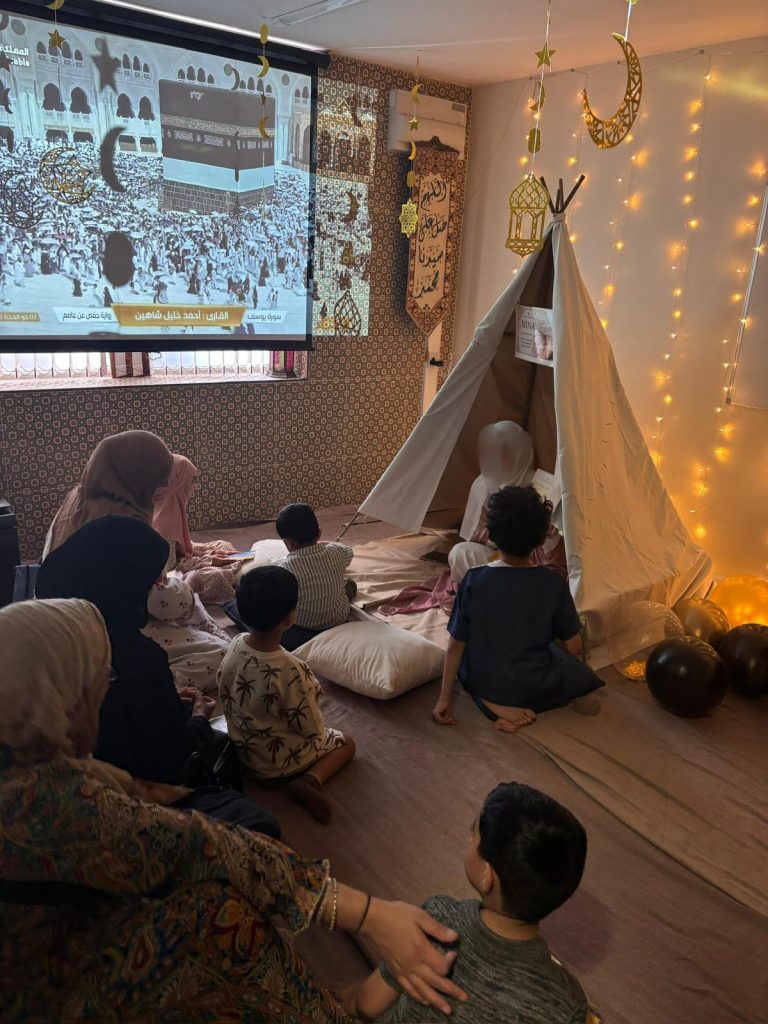
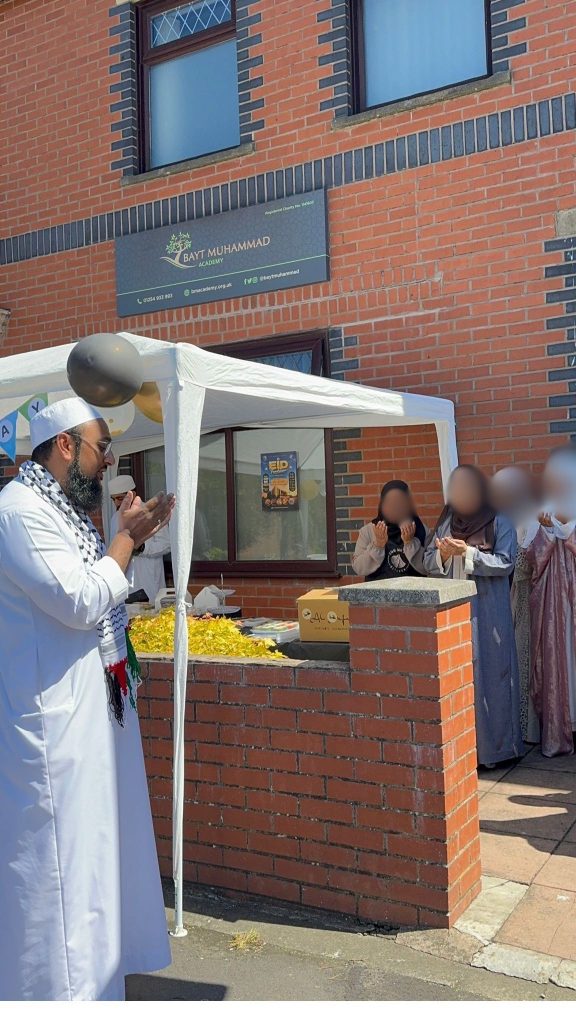
On the weekend following Eid, we were in Bolton for a Family Eid Fair hosted by Saeed Institute at The 3D Centre.


A massive thanks to all of you for the overwhelming love and support at both events and over the last 6 months. It has been an absolute pleasure to meet and serve so many of you and we hope to see you again very soon!
We are very new in the market and are working hard to learn and improve every day. So, we are immensely thankful for your patience and support. It really makes all the difference and gives us the strength to continue! It has been an absolute pleasure to meet and serve so many of you and we hope to see you again very soon! We have something very special in the works for you all to look forward to! So, keep an eye out for our Latest News & Updates!
VOLUNTEERS REQUIRED!
As we continue to grow, we are looking for dedicated volunteers to help support our small team. If you would like to be part of this journey and help us work towards our vision, we would love to hear from you. Whether you can assist at events or behind the scenes, this is a wonderful opportunity to utilise your skills and talent in serving Allah and His Beloved SAW. Join us in building a legacy for generations to come! Fill in the following form and we will be in touch:
WE WOULD LOVE TO HEAR FROM YOU!
Let us know what you would love to see at our next stall or event! DM us on our Instagram or WhatsApp below:
Instagram: @umm_mabads_kitchen
WhatsApp: 07348547392
Sunnah Recipe of the Month
Honey & Date Energy Bites

A simple, wholesome treat inspired by foods beloved to the Prophet ﷺ.
Looking for a quick, nourishing snack made with simple ingredients? These Honey & Date Energy Bites combine the natural sweetness of dates and honey with hearty oats, crunchy almonds, and warming cinnamon. Easy to prepare and packed with natural energy, they make a perfect snack for busy days, post-workout fuel, or a healthy addition to your tea table.
Why You’ll Love These Energy Bites
- Naturally sweetened with dates and honey
- No baking required
- Ready in under 40 minutes
- Rich in fiber and healthy fats
- Inspired by ingredients frequently mentioned in the Sunnah
Ingredients
- 10 soft dates, pitted
- 2 tablespoons honey
- 1 cup rolled oats
- ¼ cup almonds, finely chopped
- 1 teaspoon ground cinnamon
Method
- Place the dates in a food processor and blend until they form a smooth paste.
- Add the honey, oats, chopped almonds, and cinnamon to the date paste.
- Mix thoroughly until all ingredients are well combined.
- Roll the mixture into small bite-sized balls using your hands.
- Place the energy bites in the refrigerator for 30 minutes to firm up.
- Serve chilled and enjoy.
Serving Suggestions
These energy bites are perfect:
- As a healthy afternoon snack
- Alongside tea or coffee
- For a quick breakfast on the go
- As a naturally sweet treat during Ramadan
Nutritional Benefits
Dates are a natural source of energy and contain fiber, vitamins, and minerals that support overall well-being. Combined with nutrient-dense almonds, heart-healthy oats, and antioxidant-rich cinnamon, these energy bites offer a satisfying snack that nourishes both body and mind.
Yield
Makes approximately 12–15 energy bites.
Tip: For extra texture, roll the finished bites in shredded coconut, crushed almonds, or sesame seeds before refrigerating.
New Building Project Update
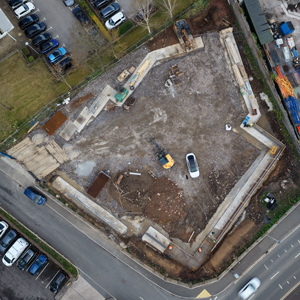
🌟 Phase 2: Groundworks & Steel Structure
Alhamdulillah! Groundwork has officially begun, marking a major milestone in the development of the UK’s first Shaafi’i Darul Uloom. Site preparation is now underway as the land is being readied for the foundations and steel structure.
This progress is only possible through your du’as, donations and continued support. Every contribution is helping turn this vision into reality—creating a centre that will nurture Ulama, Huffadh and seekers of sacred knowledge for generations to come.
While we celebrate this exciting step forward, urgent funding is still needed to maintain momentum and complete Phase 2. We invite you to continue this journey with us and be part of a lasting legacy that will benefit countless people for years to come.
Let’s connect:
- Which story or piece of poetry from Imām al-Shāfi’ī‘’s life resonated with you the most?
- Reply to the following email with any questions: info@bmacademy.org.uk
- Or reach out to us via Instagram @baytmuhammad / WhatsApp on 07348547392
SIGN UP TO AL-RISAALAH MONTHLY!